Machine learning and agent tooling from first principles: measurable structure, privilege boundaries, and accessibility by design — from Inka khipus and Quechua NLP to Supabase MCP/RLS.
A lightweight accessibility check inspired by my Text Barrier Detector — no server, no model API. Heuristics flag long sentences, passive-ish constructions, and dense jargon so barriers are visible as you type.
Try a sentence or paragraph
Long sentencePassive-ishDense / jargon
Heuristic portfolio demo — not a WCAG audit or the full computer-vision Text Barrier Detector pipeline.
Inka khipus store administration in cord structure, not text. Incomplete tables; off-the-shelf CV does not answer which specimens share an administrative style.
2. Research & data architecture
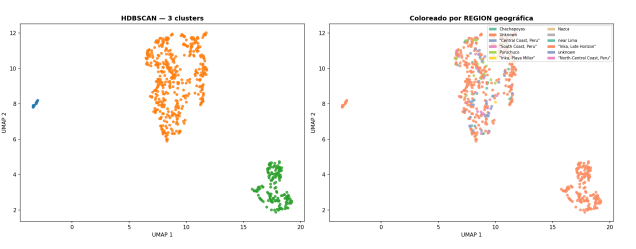
Open Khipu Repository → hierarchy-aware features → UMAP + HDBSCAN → XGBoost. End-to-end pipeline in the public repo.
3. Ethics & accessibility of knowledge
Open metrics, no speculative “translation” of khipus, methods experts can audit. Accessibility = access to code and error cases, not only a figure.
4. Impact / learnings
F1 0.86 on imperial style; geographic clusters. Preprint + EEML 2026 (fully funded). Feature design beat model fashion.
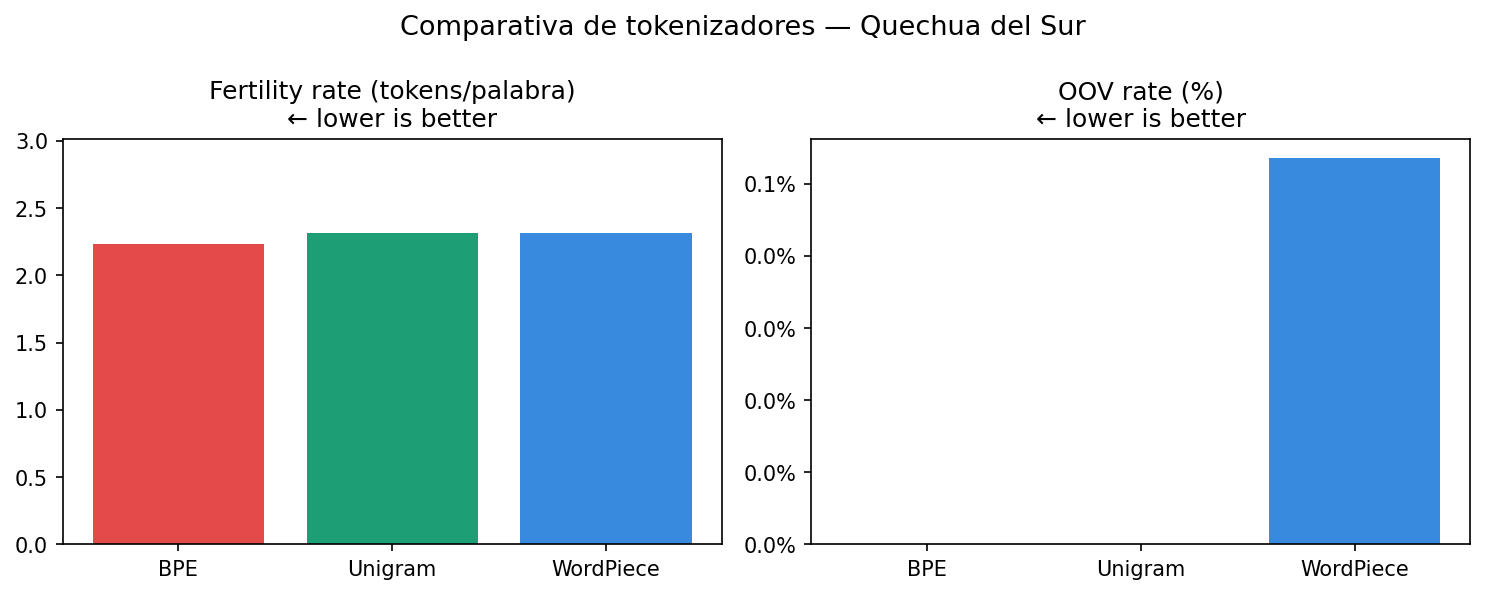
BPE and space-based tokenizers assume European morphology. Southern Quechua is agglutinative: wrong segmentation collapses every downstream score.
2. Research & evaluation design
Morphology-aware PRPE vs BPE / Unigram / WordPiece under a shared MorphAcc protocol. Public code so the benchmark is reproducible.
3. Ethics & language justice
Low-resource work is easy to overclaim. Choice: publish the failure of standard tokenizers with numbers, not a chatbot demo that hides bad segmentation.
4. Impact / learnings
PRPE 83.33% MorphAcc vs BPE 6.67%. Research baseline for Quechua pipelines — relevant to multilingual / Hugging Face tracks.
orgs→memberships→documents·no service_role in browser
Architecture: MCP tools scoped to the caller JWT; multi-tenant demo schema; writes denied by default.
1. Problem / need
Agent demos often hand the model a service_role key. That breaks multi-tenant products and teaches the wrong model for AI over databases.
2. UX research & system architecture
Jobs mapped: list tables, explain query, draft RLS, read-only SQL. MCP on Edge Functions under user JWT + multi-tenant RLS schema.
3. Ethics & safety constraints
No write tools by default. No service_role in the browser. RLS drafts labeled for human review. Privilege boundaries stay legible.
4. Impact / learnings
Public TypeScript pattern for MCP + RLS under JWT. The UX is the tool list and the RLS deny — safe defaults beat a cleverer model with the wrong key.
Flows by Maky
active consultancy · Lima
UX-led ops systems for LATAM teams still on WhatsApp and spreadsheets: guided intake → n8n → sheet/CRM, status dashboards, and client sites on the same backbone.
Typical engagement: replace a chat-based handoff with a structured flow in under two weeks.
Generic CV and chatbots do not read cord structure. Metrics were necessary because the data is tabular and incomplete.
Quechua
BPE-centric tokenizers fail on agglutinative Quechua. Without a morphology-aware benchmark, downstream scores are noise.
Forge
Most agent demos ignore tenant isolation. Forge ties MCP tools to Supabase JWT + RLS.
LATAM
Research from Lima and production ops for teams still on WhatsApp — measurable structure.
I started in UX and frontend.
Shipping interfaces taught me that the hard part is usually the messy data underneath — not the pixels. That led to ML on structured heritage data, low-resource NLP for Quechua, and agent tooling that respects Postgres RLS.
Today I publish research, build public AI infrastructure demos (Forge), run Flows by Maky, contribute through the GitHub program, and volunteer with Omdena on applied AI for social impact.
PythonML · NLPSupabaseTypeScriptProduct
GitHub programOmdena volunteerEEML 2026
LocationLima, Perú
CurrentlyFlows by Maky · GitHub program · Omdena · open to AI / ML roles
Email
Hire the person who measures structure — not demos.